For urban dwellers living a two-point-one-line life between home and office, oscillating between involution and "lying flat," where can they find a moment of respite amidst the dense concrete jungle? A personal sanctuary for relaxation?
During the renovation gap of its Tokyo headquarters, Sony Group transformed the original building into Sony Park, akin to creating a small oasis for the bustling city. New York's Central Park is even hailed as the “city's backyard garden,” but that is far from enough—this time, the boundaries of urban public space are being expanded once again, taking you beyond the continental confines of the city.

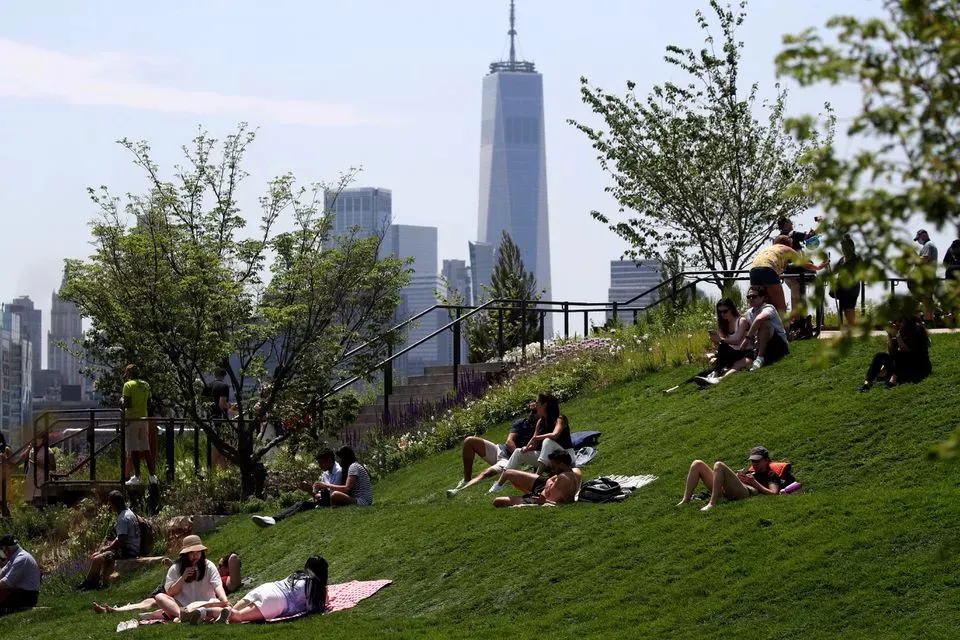
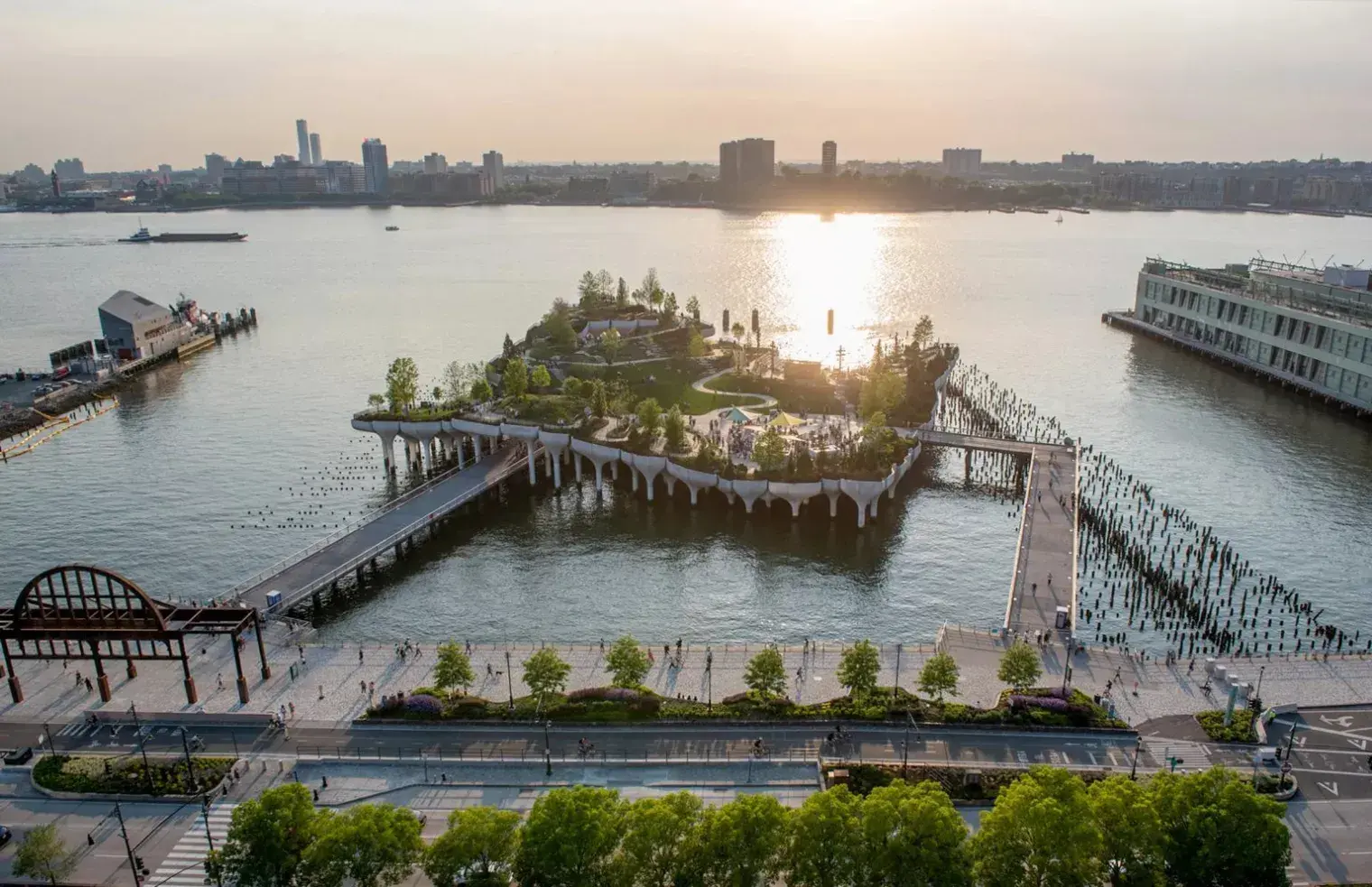
British architect Thomas Heatherwick(Thomas Heatherwick)and his studio have constructed an artificial island park spanning approximately 9,712 square meters(2.4 acres)on the Hudson River in New York using 132 concrete columns: Little Island(Little Island), embracing everyone seeking to “escape” urban life.
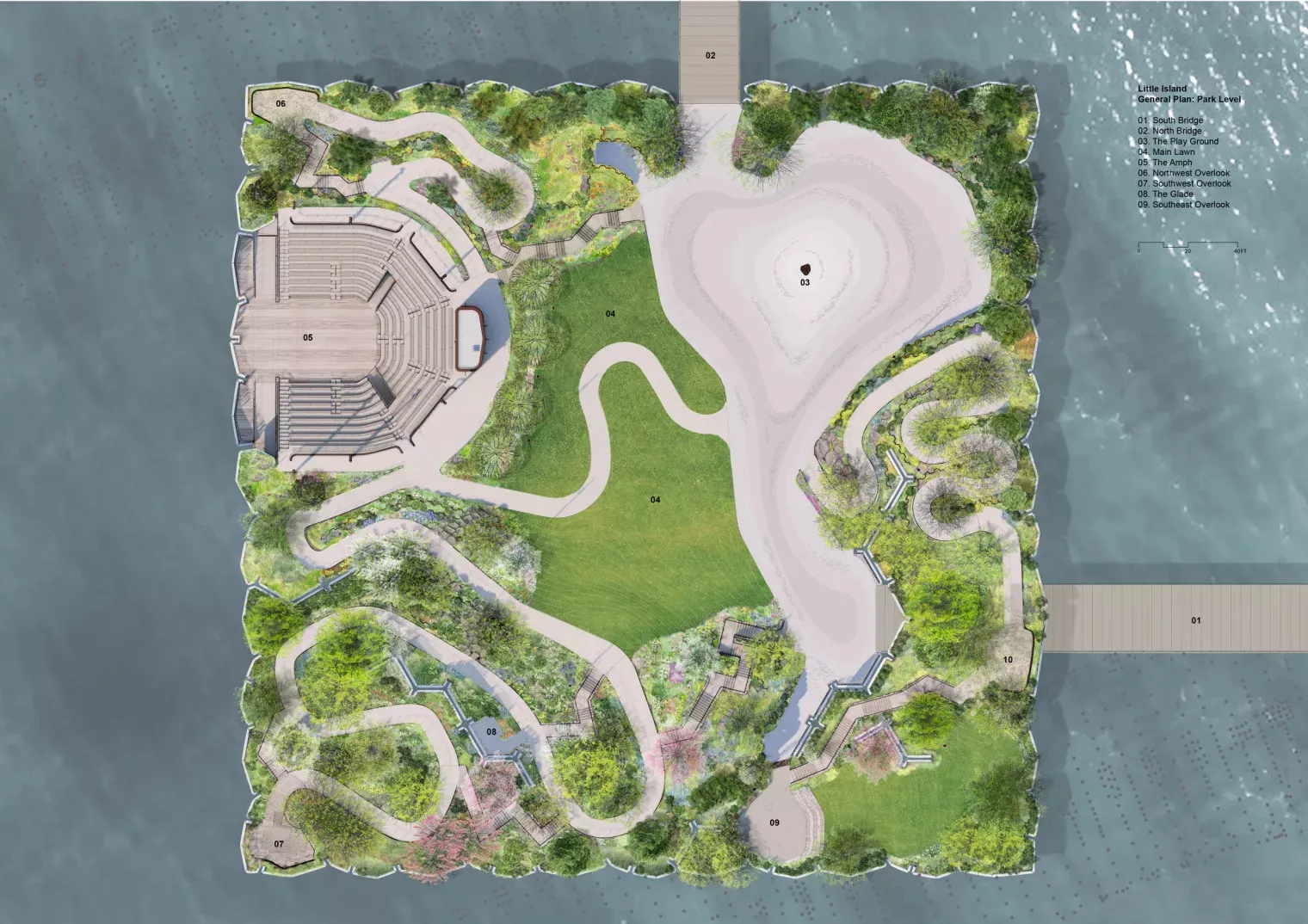
This “paradise” away from New York City was created by Heatherwick Studio in collaboration with engineering firm Arup(Arup)and New York landscape design team MNLA, aiming to provide more park space for citizens within the city. Little Island is located near the Chelsea neighborhood(Chelsea)in Manhattan's West Side, New York, with two bridge pathways leading to the island. The island features over 540 meters of winding trails, passing through various areas such as theaters and plazas.
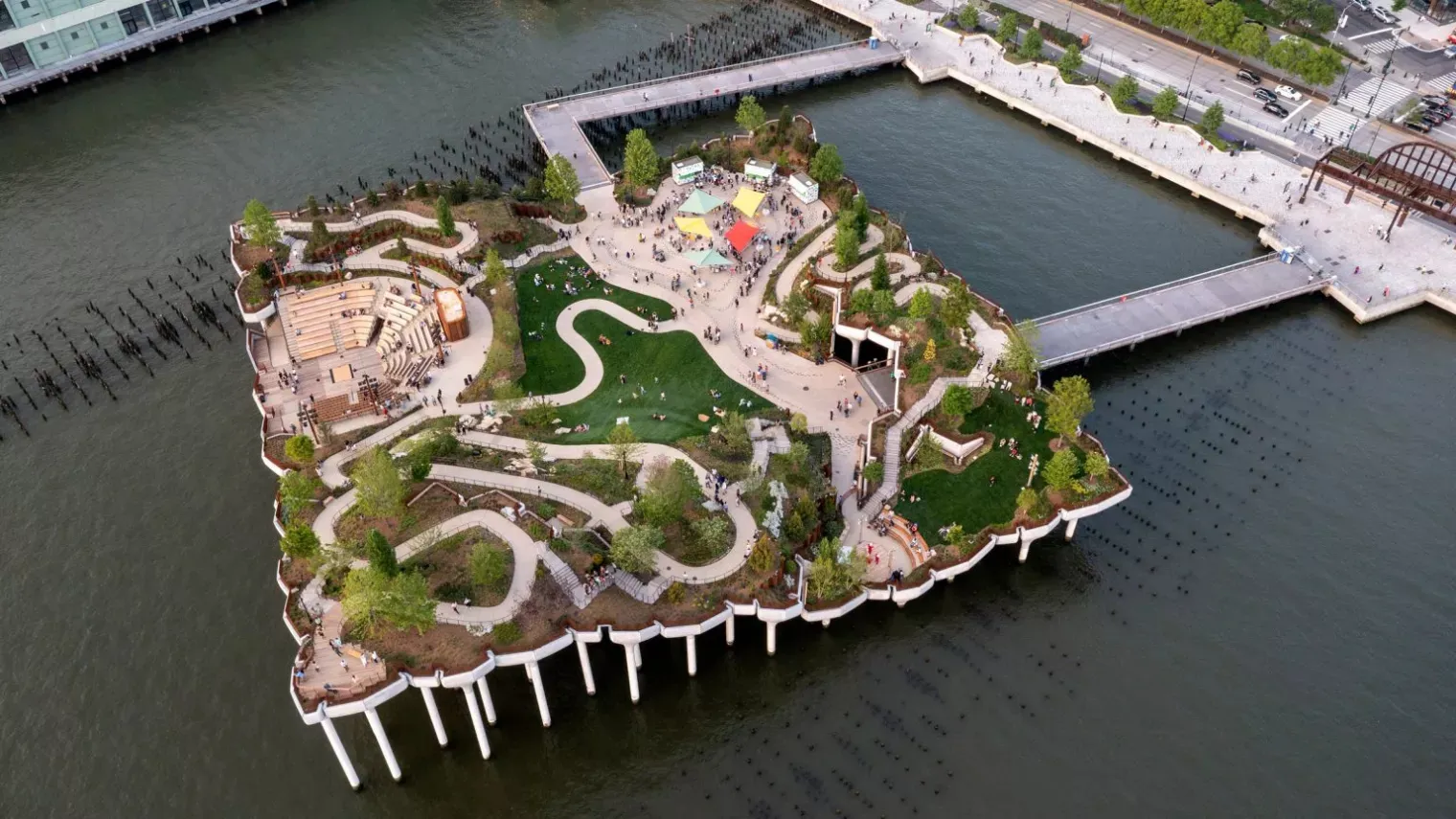
The construction of Little Island is part of the Hudson River Park renovation project, initially referred to as Pier 55. Originally, the plan was to build a pavilion on the pier, but Heatherwick Studio conceived a more novel idea: an island detached from the mainland and elevated above the river.
The design inspiration for Little Island came from Heatherwick's observation of Pier 54, which was once the disembarkation point for Titanic survivors in 1912. Now abandoned and no longer in use, only a cluster of pilings remains visible above the water*. The pier's structure enabled Heatherwick's vision to materialize, with concrete columns weighing up to 350 tons driven 61 meters into the bedrock riverbed, supporting a haven over the Hudson River.
*The structure of a high-pile wharf includes pilings embedded in the riverbed and the above-water platform. The latter typically features structural types such as beam-slab, flat slab without beams, frame, and bearing platform.
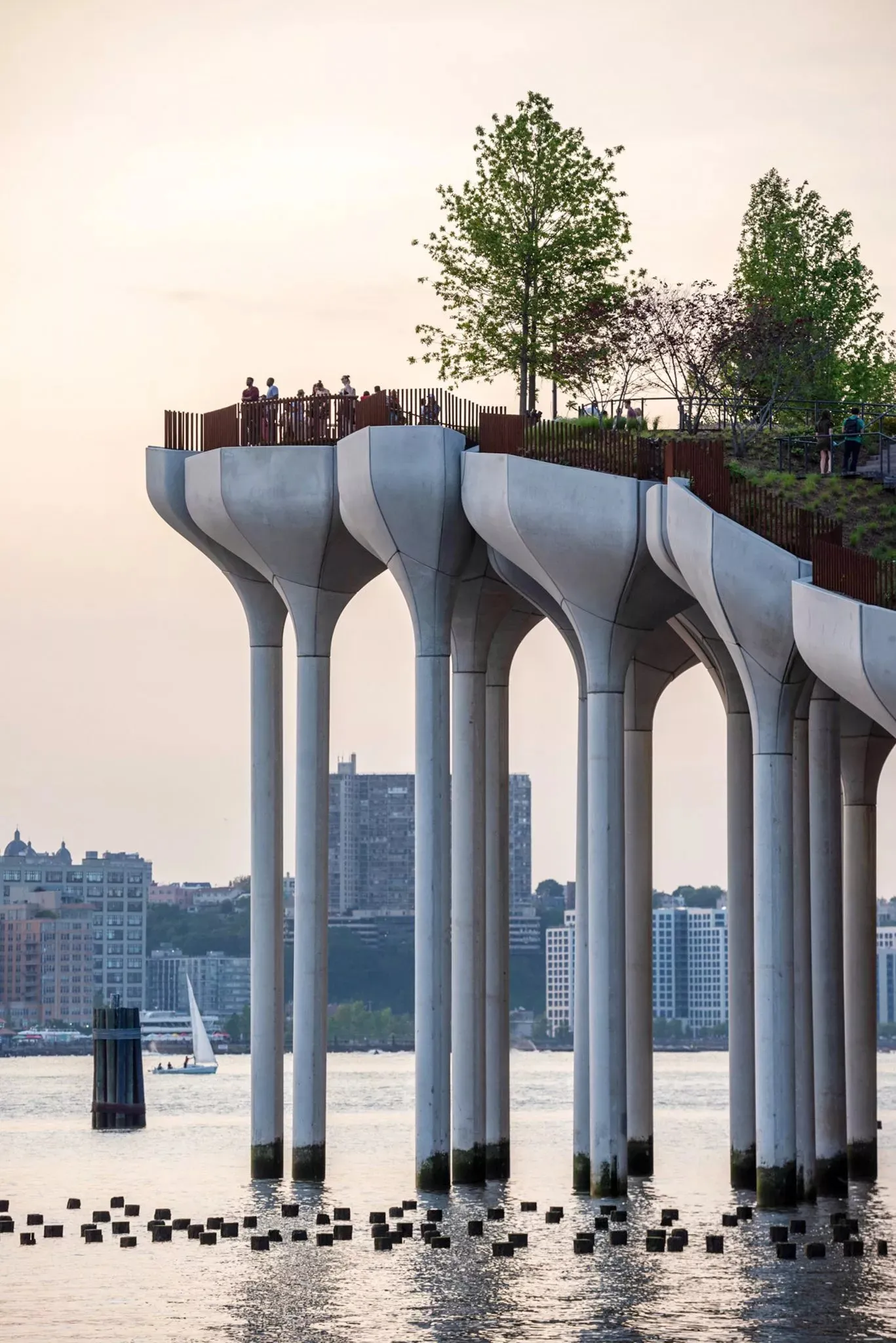
Insights from wharf structures and civil engineering knowledge were essential for Little Island's construction and its resilience against extreme river conditions during future operations. After Hurricane Sandy, the design team decided to shorten the distance between the island and the mainland while reinforcing the island's initial structural design. They also controlled the water level to keep it away from the island, reducing the risk of flooding.
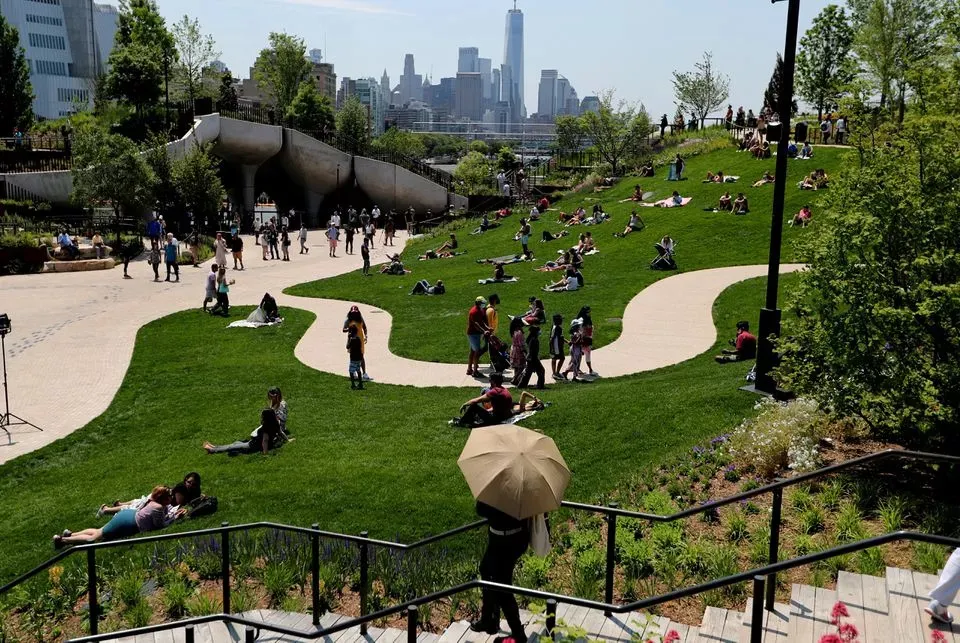
What makes Little Island even more distinctive is that while typical piers are flat, the island exhibits undulating terrain due to the varying heights of its concrete columns. Heatherwick aimed to create a sense of escape from Manhattan through the island's elevated topography. Although it is an “escape from Manhattan,” when people view the city from this vantage point, their emotional connection to New York often becomes stronger. This is akin to how some individuals, while studying or working abroad, deeply miss their hometown life.
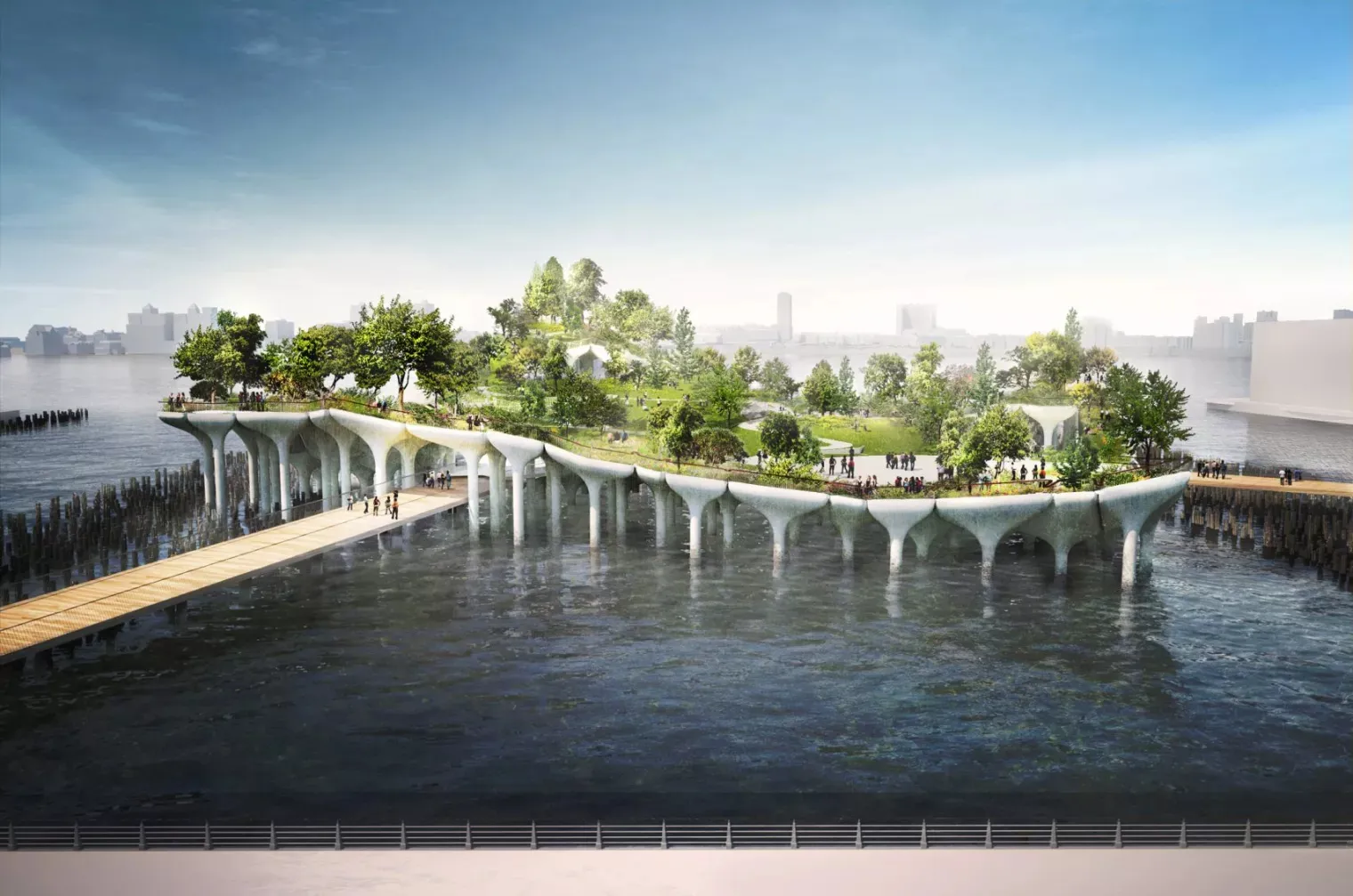
The tops of the concrete columns are specially shaped into flower-like forms with a 6-meter-wide opening, not only to support the park's soil but also to symbolize openness and gathering for citizens. Due to the island's undulating terrain, different planting landscapes can be planned accordingly. Currently, nearly 400 species of plants and almost 100 species of evergreen trees are planted, creating shaded groves and lush green carpets. Strolling through the park to admire the diverse flora throughout the seasons is truly delightful. These plants also provide some windbreak for people walking in Hudson River Park.
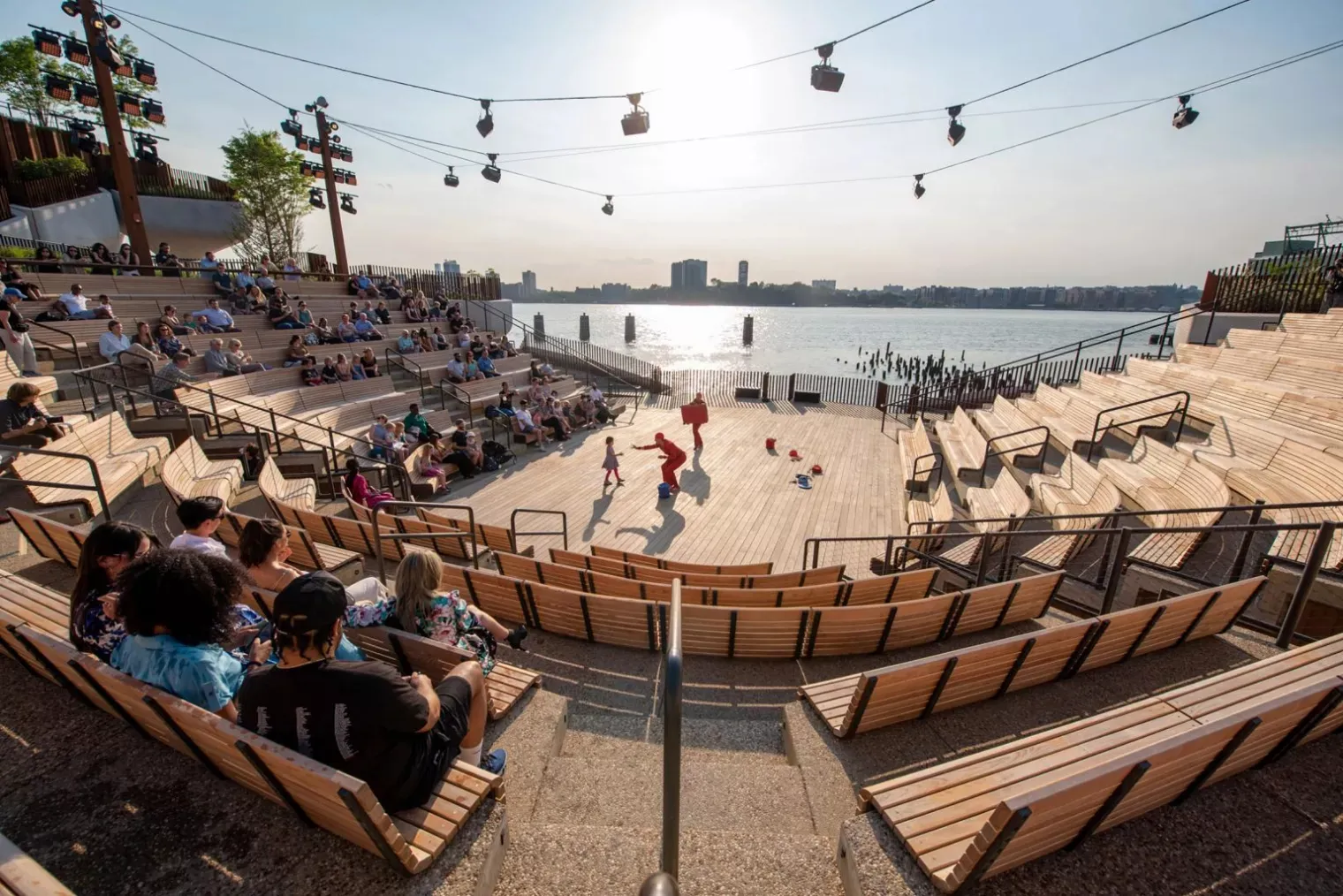
The island features three open spaces, ranked by capacity: a small stage accommodating 200 people, a circular amphitheater for 700 spectators, and a central plaza that can hold 3,500 people. Notably, the backstage facilities and equipment required for performances are located off the island and transported via bridges when needed, thus preserving the island's ecological environment and landscape.
BY TOPYS