Renowned Japanese independent editor and sharp-tongued “wild creator” Tsuzuki Kyoichi once bluntly pointed out that the publishing industry often blames its decline on the rise of internet technology and the waning reading interest among young people. However, in reality, “what kills publishing is its creators—us editors.”
Regardless of whether editors should bear the primary responsibility for the decline of the publishing industry, it is true that some editors are striving to save print media, such as those at *The New York Times*.
New York Times Mag Labs is a “laboratory” established by *The New York Times* dedicated to experimenting with print innovations. Collaborating with various designers, they explore diverse themes driven by visual creativity—“creating delightful printed gifts for readers.” Among these, the “New York Times for Kids,” which has become a monthly staple, serves as bedside reading for the next generation.

In contrast, the children's edition of *The New York Times* has successfully evolved from an experimental feature into a regular column. Published for over five years, it has consistently remained print-only. Perhaps they have indeed found a key to unlocking children's interest in reading?
From Special Edition to Regular Feature
In fact, *The New York Times Magazine* has long harbored the idea of creating a children's edition. “We've been telling stories for adults for over 160 years,” said magazine editor Jake Silverstein. “We've done many different types of sections and magazines, but one thing we haven't truly done is create a newspaper specifically for children.”
To some extent, this idea can be seen as an attempt by this century-old newspaper to cultivate a new generation of readers. While they believe that subscribers likely place the newspaper on the breakfast table, giving relatively precocious children a chance to encounter it, this is not the most direct form of communication. They aim to establish a closer connection with children aged 8 to 10.
Thus, starting from the experimental content of New York Times Mag Labs, they decided to try creating something children would enjoy.
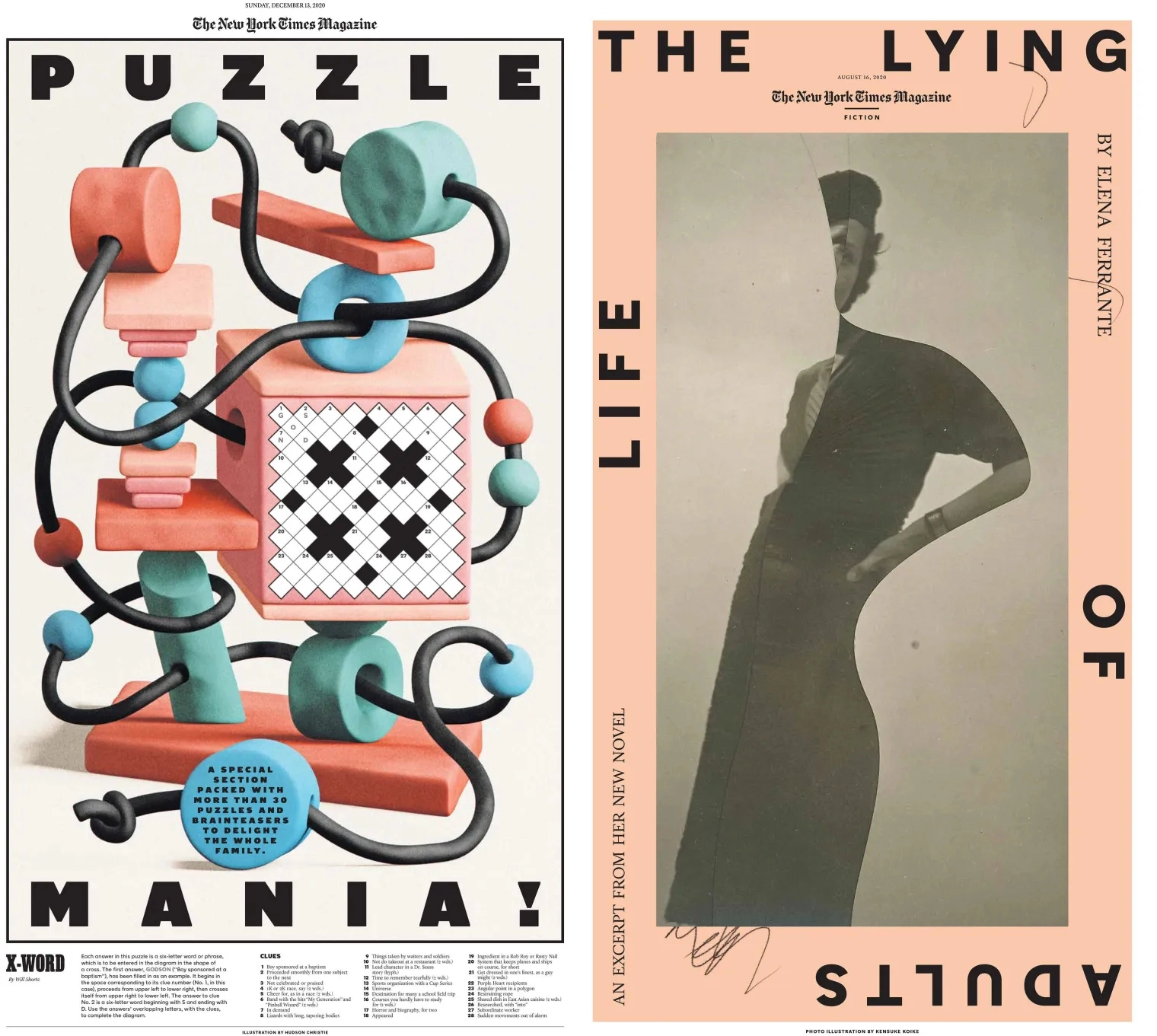
Using *The New York Times Magazine*“s own sections as a reference, they structured the children's edition around content categories such as Nation, Arts, Travel, Sports, Food, and Opinion. ”We wanted to have an opinion section, just like a regular newspaper,“ Silverstein said. ”We thought it would be interesting to hear from kids."
However, instead of simply asking for children's opinions, they organized a visit to a local elementary school. *The New York Times Magazine*'s special projects editor Caitlin Roper and senior contributing opinion editor Aaron Retica visited a fourth-grade class in Queens, explaining what the *Times* opinion section is and how the newspaper collaborates with columnists and external contributors.
“We had opinion columnists talk about how they work and the function of the newspaper, and then taught the kids how to write their own opinions,” Silverstein said. Ultimately, this content was included in the first “Kids” issue, and these children were hailed in the coverage as the youngest opinion contributors in *The New York Times*' history.
The first issue, “How to have more fun than usual day,” published on May 14, 2017, featured not only “practical” topics like “how to win an argument with your parents” that children would absolutely want to know, but also interactive content such as how to make pizza and create your own word puzzles. It introduced the world's eight most thrilling roller coasters and, through interviews with professionals in various “cool jobs” like ski athletes, explained how they landed such interesting careers.
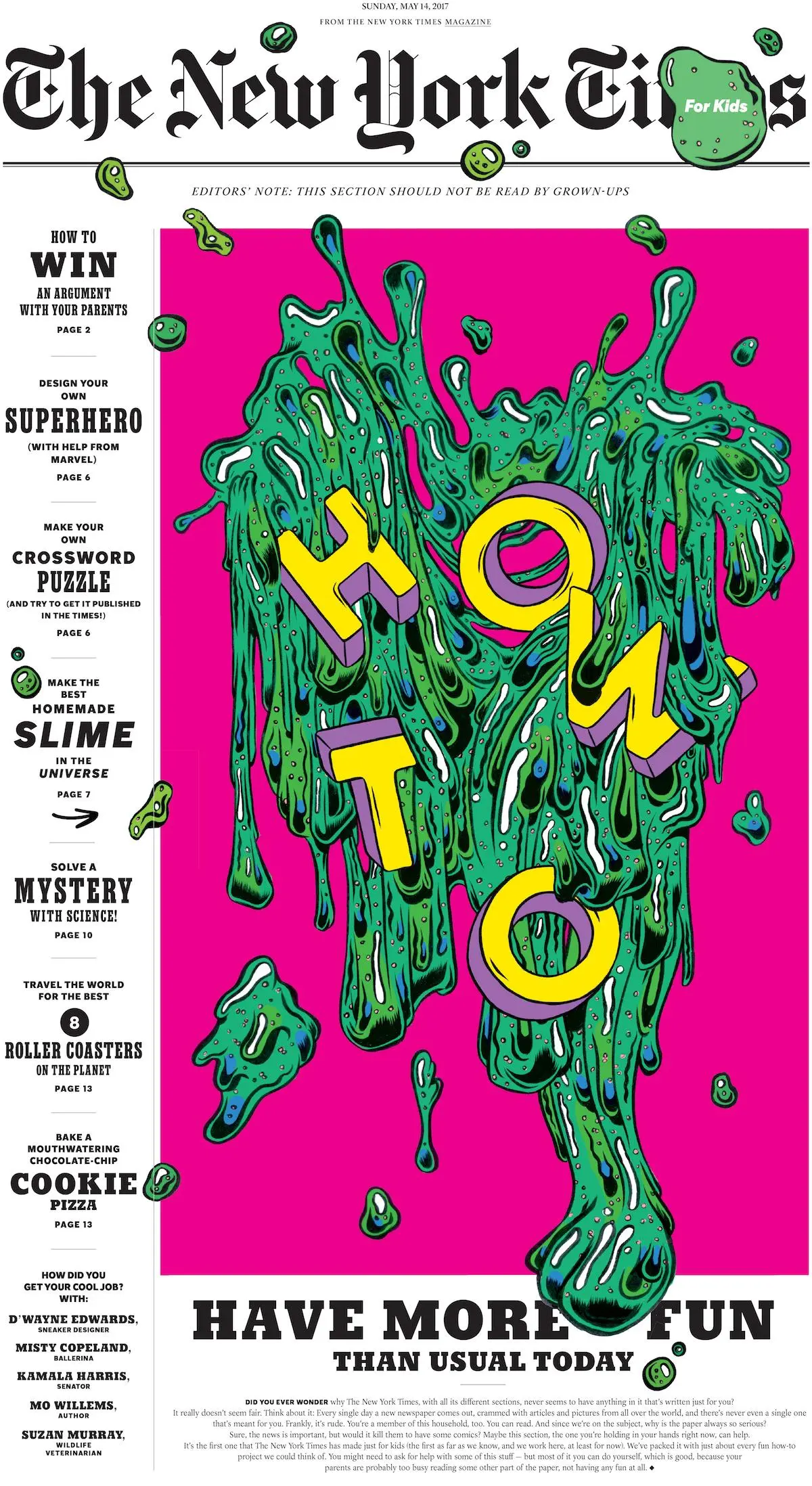
“We didn't focus on current events. When we first ventured into children's content, we wanted to emphasize fun,” Silverstein explained.
How popular was this issue? Not only did many children and parents email the newspaper expressing their love for the content, but one parent even started an online petition hoping to make it a regular feature of *The New York Times*. Editor Silverstein received an email from a third-grader expressing her disappointment that she hadn't seen a new issue of the children's newspaper on the past Sunday.
New York Times Mag Labs places great emphasis on “freshness,” constantly experimenting with new directions and topics to avoid repetition and fixed content. The children's edition was originally just one of their projects, but due to excellent reader feedback, after months of discussion, it was ultimately decided to establish it as a regular feature, published monthly on the last Sunday of each month.
Despite its readership being digital natives, it continues to follow the lab's “tradition” of being print-only, even to this day.
Visuals Are Not Just Supplementary
As mentioned earlier, New York Times Mag Labs productions are design-driven, with each issue featuring eye-catching visuals. The *New York Times for Kids*, born from this approach, is no exception—design is not merely an embellishment but an integral part of the overall creation, even a core component.
While ensuring informational value and educational content, they strive to make the newspaper's design and illustrations rich and aesthetically pleasing. The lab's art director, Debra Bishop, stated that they aim to adapt the design to adolescent reading habits while, importantly, not underestimating their comprehension. “You want it to be cool, and you want it to be smart.”
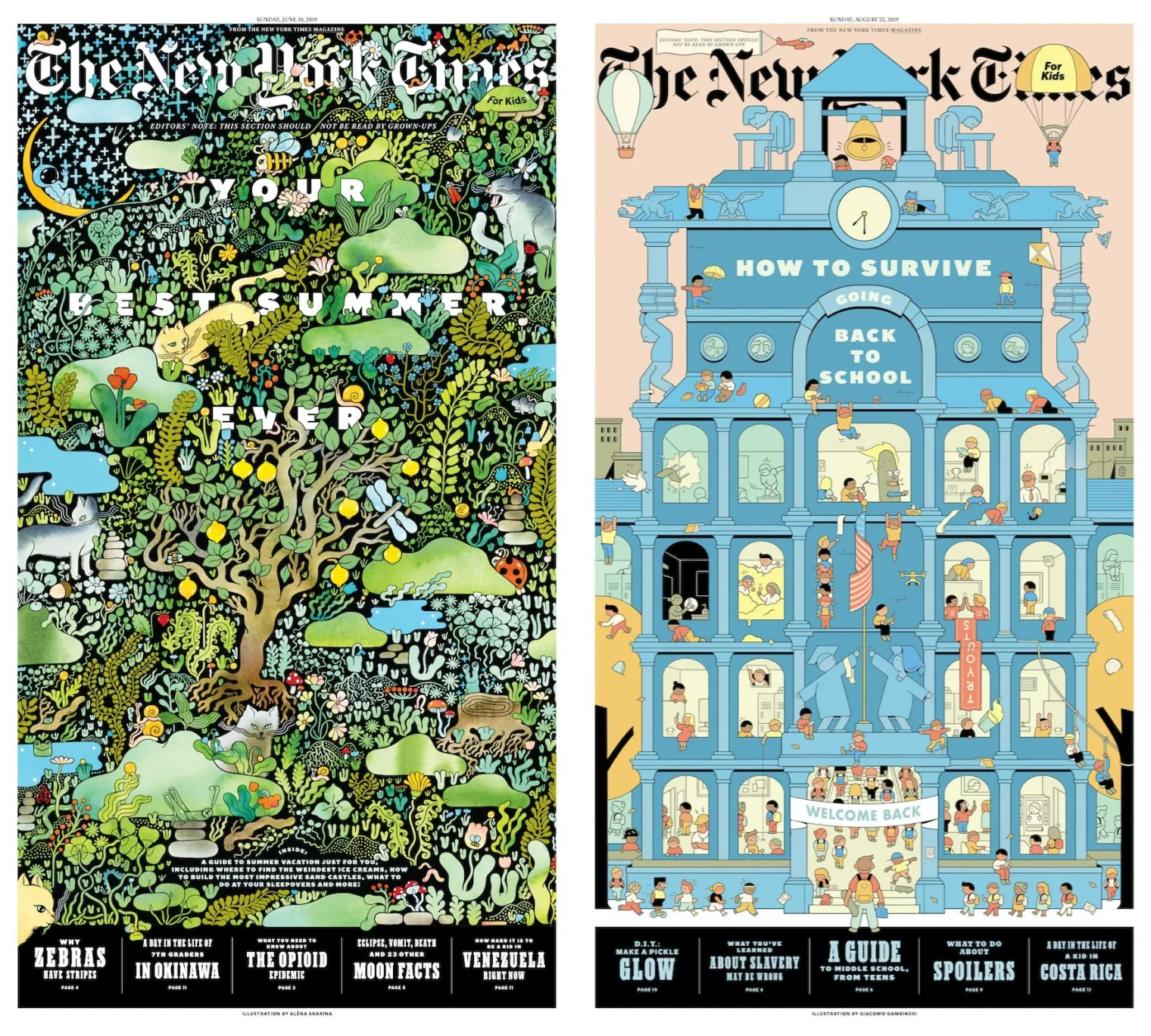
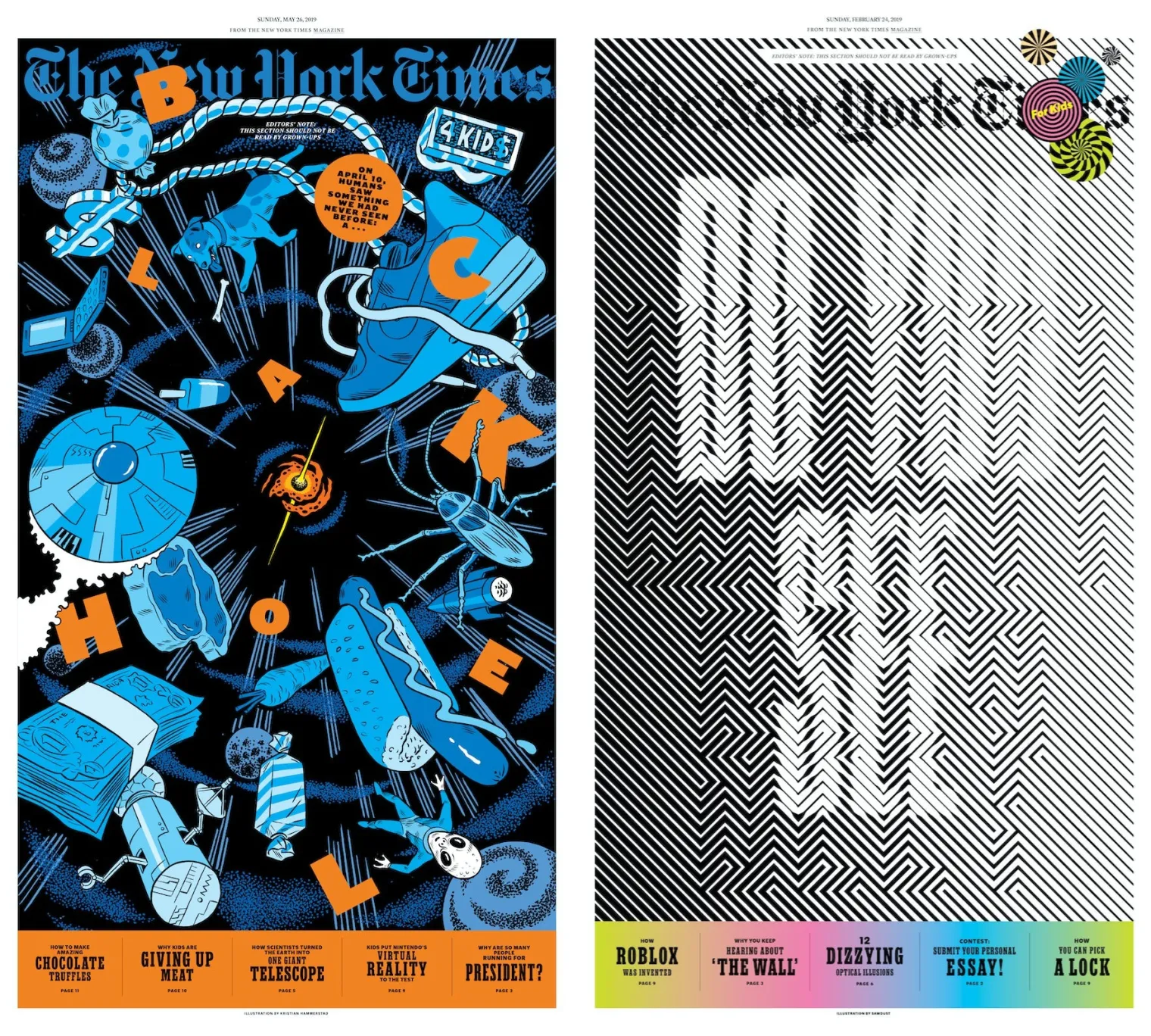
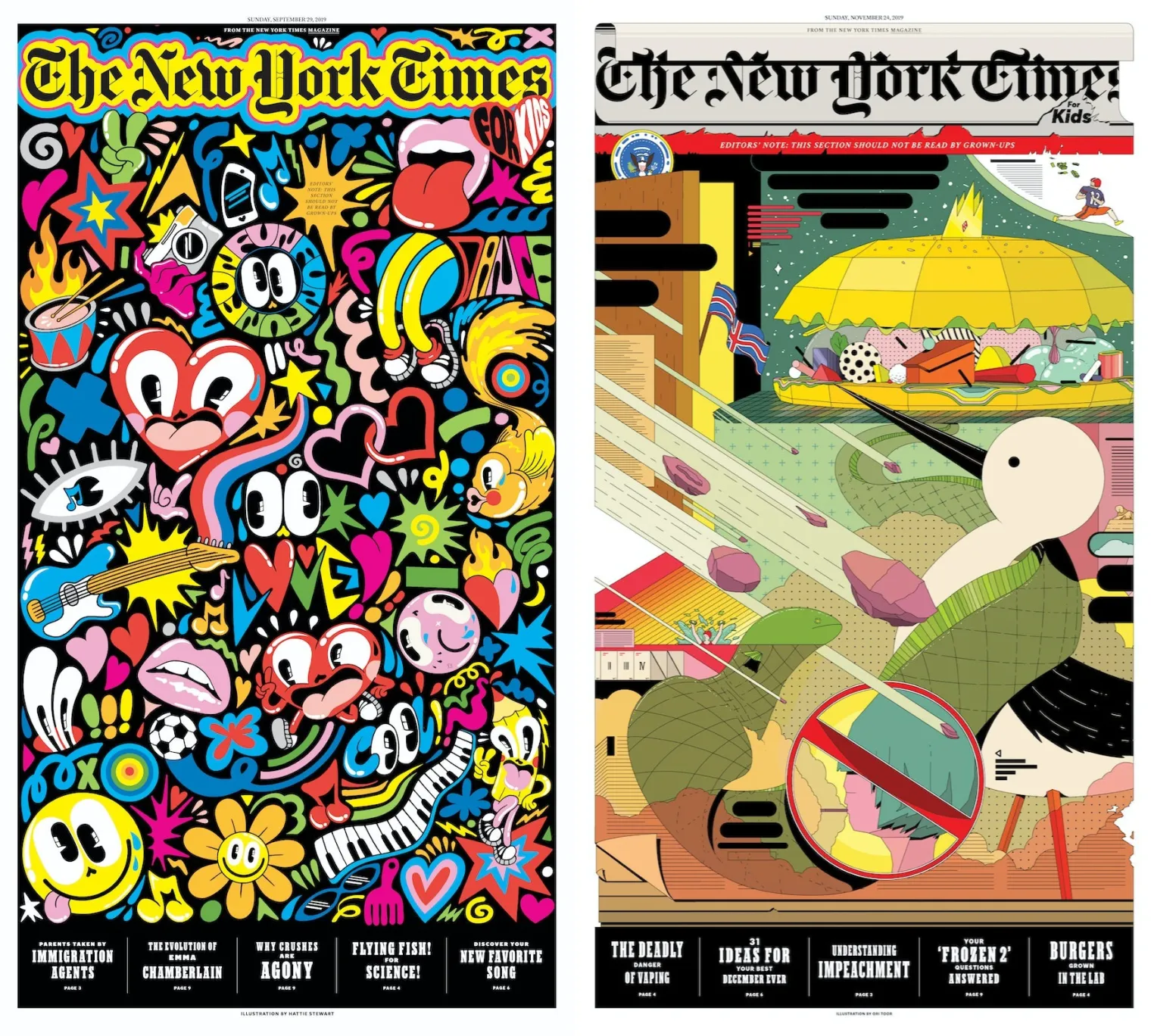
Therefore, they do not hire illustrators who specialize in drawing for children but collaborate with artists known for their sharp illustrations in adult publications. Similarly, for photography, they choose studios that have worked with major companies or well-known brands rather than photographers with extensive experience in children's photography. The covers, which are highly praised, are approached by designers with a poster-making mindset. “We want them to be timeless and worth collecting.”

In a report titled “Marshmallow Magic,” they explain to children how marshmallows are made. The photographer visited the factory of the famous marshmallow brand Peeps, capturing highly designed photos that completely defy typical “factory” imagery. These images are enlarged and arranged across spreads, akin to stepping into Willy Wonka's chocolate factory. Another issue focused on teaching children how to plant and tend a garden. Given the content's substantial natural science knowledge, Bishop wanted the cover to have a playful, game-like quality. They invited illustrator Armando Veve to draw personified plants, cloaking science in a mythical "garment."

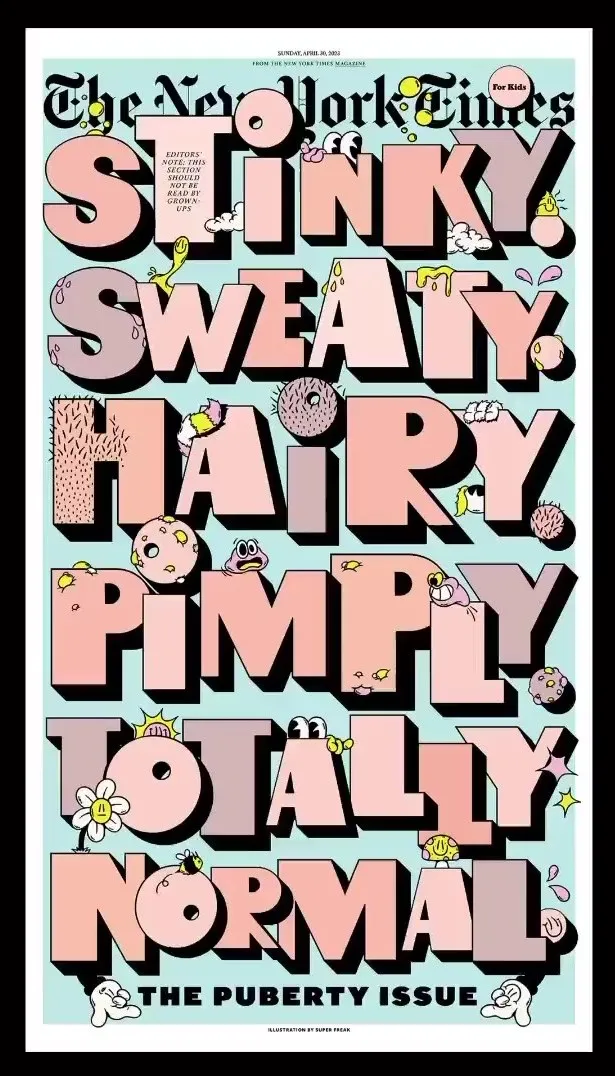
The success of this monthly publication exemplifies how outstanding design and illustration can help children understand and engage with the world around them, fostering positive interaction. In fact, it is not only popular with children but also eagerly followed by many adults, despite each cover bearing a “friendly reminder”: The following content is not suitable for adults.
“Who says children don't need news made specifically for them? Our goal is not only to help kids understand the complex world they live in but also, through tailored design, to let them experience the joy of print media. We treat these readers with the same respect as all our readers,” Silverstein said.
Although most of the time, *New York Times for Kids* content revolves around science education and topics close to adolescent life, in recent years, it has faced some criticism. For instance, Amber Athey, editor of *The Spectator*, pointed out that an issue about puberty, while stating “Periods, deodorant, pimples... Parents, friendships, mustaches, bras... it's all in here,” largely framed its content around transgender ideology.
Although, as a product of New York Times Mag Labs, the children's edition has remained print-only since its launch (in 2021, they attempted an iPad app but ultimately canceled the plan), Bishop believes moving online might be an inevitable path for this content. They even have more ideas, such as launching games and merchandise.
If introducing the new generation to and engaging them with print media is a responsibility inherent to *New York Times for Kids* from its parent, then after over five years of refinement, as it gradually grows into a new brand for this century-old media institution, what new content and forms can provide a continuous stream of surprises, open readers to new perceptions of the brand, and deliver fresh experiences—perhaps these are what they aim to explore next.